
1920 × 1200 Spatial Light Modulator for precise phase modulation
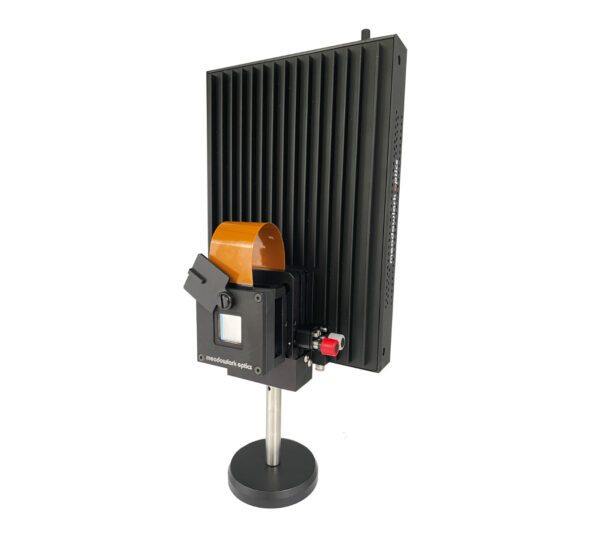
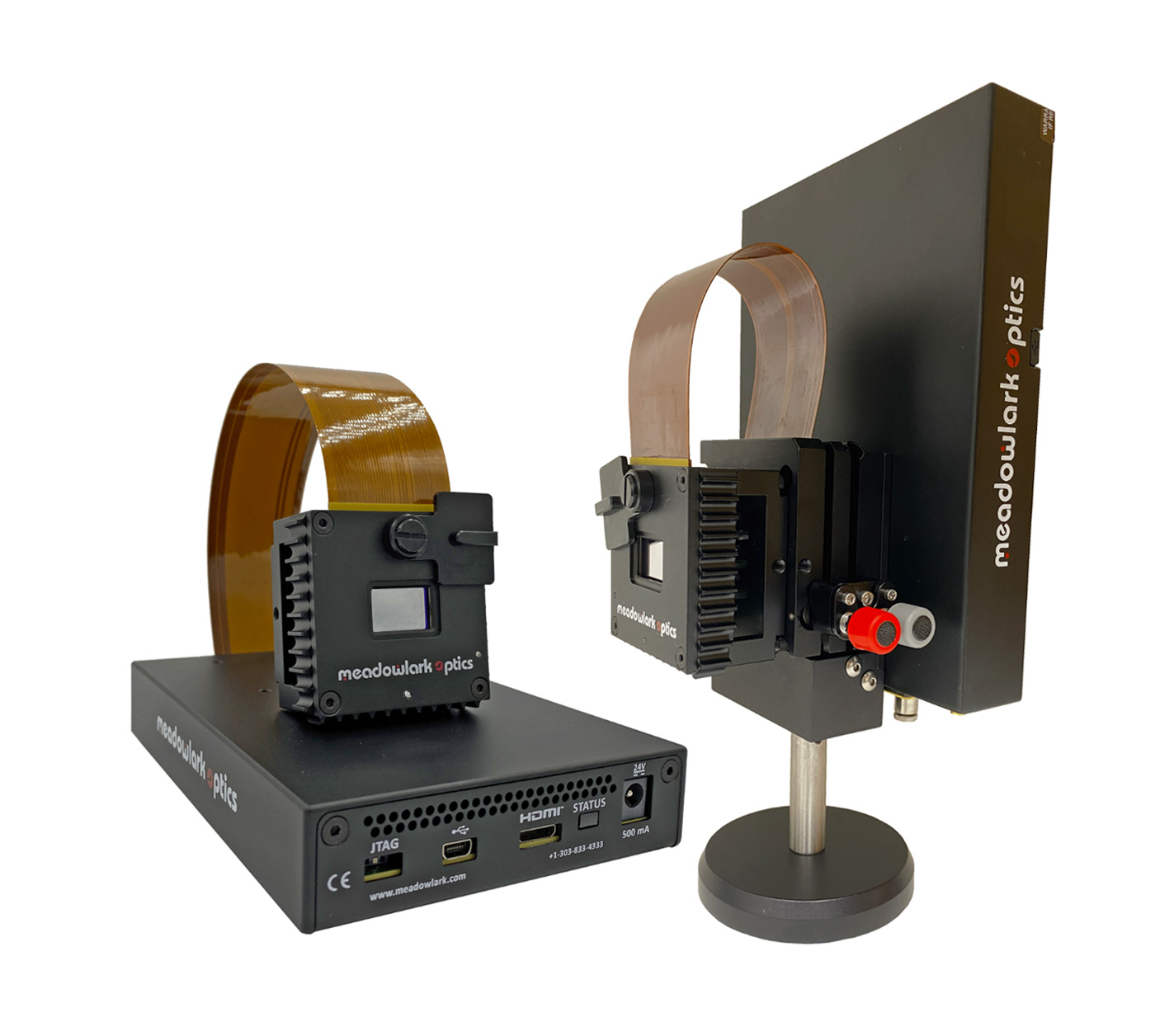
The 1920 × 1200 Spatial Light Modulator (SLM) from Meadowlark Optics is a high-resolution reflective Liquid-Crystal-on-Silicon (LCoS) modulator for precise and dynamic control of optical wavefronts. With 1920 × 1200 pixels, a pixel pitch of 8 × 8 µm, and an active area of 15.36 × 9.60 mm, the system is suitable for demanding applications in research, photonics, and optical metrology.
Unlike traditional displays, Meadowlark SLMs are specifically designed for optical modulation. The analog driving enables continuous phase modulation with high phase stability and low phase ripple. In addition to pure phase modulation, corresponding optical configurations can also be used for amplitude modulation and combined phase and amplitude applications.
E-Series and S-Series
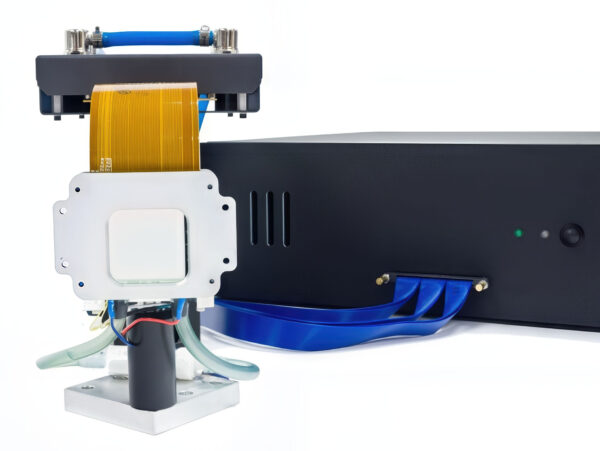
The 1920 × 1200 SLM is available in various configurations. The E-Series offers an economical solution with 8-bit HDMI control and is suitable for research and education, among other applications. The S-Series extends the system with 10-bit control and offers additional options such as customized dielectric mirror coatings and liquid cooling for applications with higher optical power.
High efficiency and phase stability
The high fill factor of 95.6 % and the optical coatings—which can be optimized for the specific application—enable efficient utilization of the incident light. Meadowlark specifies an efficiency of 76–91 % for the 0th order of diffraction, depending on the model, or 92–98 % for variants with a dielectric mirror coating.
A special strength of the Meadowlark SLMs is their high phase stability. The specially developed backplanes combine high addressing rates with direct analog driving, thereby reducing phase ripple. For particularly demanding applications, custom configurations are additionally available.
Software and integration
The SLMs come with a graphical user interface and software development kits for LabVIEW, MATLAB, Python, and C++. Among other things, these can be used to generate phase patterns, correct aberrations, perform global and regional calibrations, output image sequences, and monitor the temperature of the SLM. Regional calibrations enable pixel-by-pixel characterization and correction of the phase response.
Wavelengths and Applications
Variants and coatings for 350–850 nm, 500–1200 nm, and 850–1650 nm are available for different spectral ranges. Standard calibration wavelengths range from 405 nm to 1550 nm. This allows the SLM to be configured for numerous applications from visible to infrared wavelengths.
Typical applications include beam shaping, computer-generated holography, adaptive optics, microscopy, optical tweezing, optical information processing, and the generation of complex beam profiles and wavefronts. Meadowlark also cites applications such as optogenetics, STED microscopy, and femtosecond pulse compression.