
LIBS spectroscopy
The LIBS spectroscopy (Laser-Induced Breakdown Spectroscopy) has established itself as a groundbreaking method for rapid and precise elemental analysis. This innovative technology is versatile and plays an increasingly important role both in research and industry. But what exactly is the LIBS spectroscopy, how does it work and what advantages does it offer?
What is LIBS spectroscopy?
LIBS spectroscopy is therefore an analytical technique that is based on the analysis of the light emitted by a laser-induced plasma. A powerful laser pulse focuses on the surface of a sample. This pulse vaporizes a tiny portion of the material and ionizes it. The resulting plasma emits light. The specific wavelengths of this light provide information about the chemical composition of the sample. Thus, this method enables precise, fast, and also non-destructive elemental analysis.
How does LIBS technology work?
The LIBS spectroscopy is based on four essential steps:
- laser ablationA pulsed laser beam of high energy hits the sample surface and leads to the evaporation of a tiny area of material.
- plasma generationThe evaporated material is further ionized by the laser, resulting in a hot plasma.
- light emissionAs the plasma cools, the excited atoms and ions emit light at specific wavelengths, a fundamental process in laser-induced plasma spectroscopy.
- spectral analysis: A spectrometer detects the emitted light and creates a spectrum that reflects the presence and concentration of elements in the sample.
Applications of LIBS Spectroscopy
The versatility of the LIBS technology makes it suitable for a wide range of applications:
- materials scienceAnalysis of metals, alloys and ceramics for quality control.
- Environmental monitoring: Detection of heavy metals and pollutants in soil, water and air by laser-induced plasma spectroscopy.
- Industry: Process control in metallurgy, petrochemicals and pharmaceuticals.
- cultural and art historyInspection of paintings and artifacts without damage.
- Planetary ResearchThe NASA Mars rover “Curiosity” uses LIBS to analyze Martian rocks.
Advantages of LIBS technology
LIBS spectroscopy offers numerous advantages. It is characterized by its speed, as results are delivered in real time, which is ideal for process control and enables quick decisions. Additionally, it is a non-destructive method with minimal sample preparation, ensuring that the samples remain largely intact. Another advantage is the wide range of elements that can be detected. The technique allows the detection of virtually all elements, including lighter elements such as lithium and beryllium, resulting in a comprehensive analytical profile. Furthermore, laser-induced plasma spectroscopy is extremely flexible, as it can be applied to solids, liquids, and gases, allowing for use in various environments.
Challenges and solutions
Although the LIBS technique offers many advantages, there are challenges such as matrix effects that can affect the signal. These can be minimized through calibration and advanced algorithms. By optimizing the laser parameters and using double pulse lasers, fluctuations in the plasma signal are stabilized.
Current research and developments
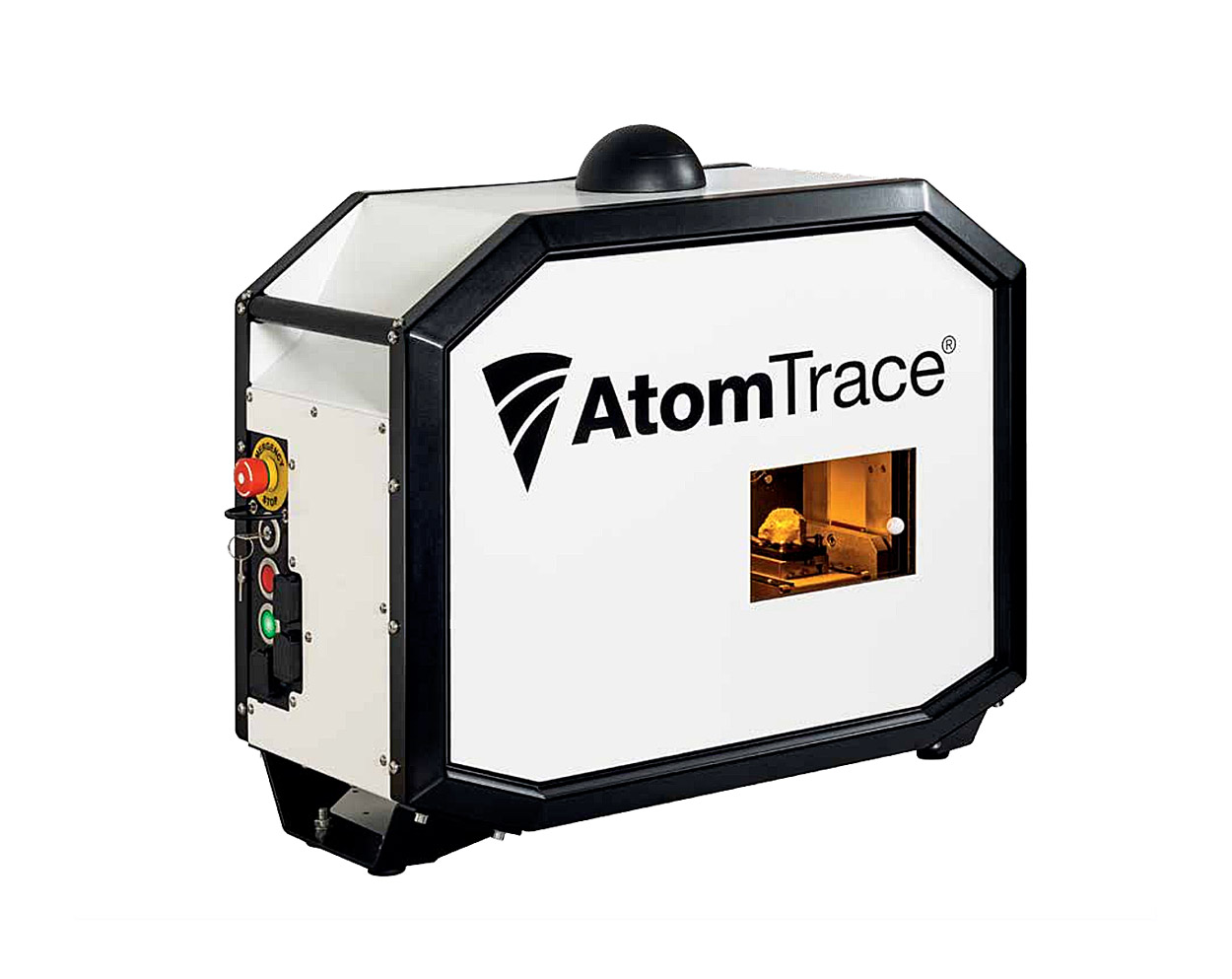
Research is working intensively to improve the sensitivity and accuracy of LIBS spectroscopy. Advances such as the combination with Raman spectroscopy or laser ablation-inductively coupled plasma mass spectrometry (LA-ICP-MS) expand the possibilities of application. In addition, portable LIBS systems are being developed to perform analyses directly on site.
future prospects
With advancing technological developments, LIBS systems are becoming increasingly compact and affordable. This not only promotes their integration into portable devices but also enables their use in remote or inaccessible areas. Additionally, in combination with artificial intelligence and machine learning, they could become even more powerful by allowing data to be analyzed more quickly and precisely.
Conclusion
LIBS spectroscopy therefore offers a unique combination of speed, versatility, and precision. Additionally, it operates without destroying the sample, making its application particularly gentle. Due to its ability to detect a wide range of elements, it is excellently suited for a wide range of applications. Thus, it represents a first-class solution for modern analytical challenges in research and industry.

Sources
- “Laser-Induced Breakdown Spectroscopy: Principles and Applications” by Andrzej W. Miziolek, Vincenzo Palleschi and Israel Schechter, Cambridge University Press, 2006.
- “Handbook of Laser-Induced Breakdown Spectroscopy” by David A. Cremers and Leon J. Radziemski, Wiley, 2013.
- NASA Mars Science Laboratory – ChemCam Instrument: NASA – ChemCam Instrument