
1536 × 1536 Spatial Light Modulator – fast hologram control with high resolution
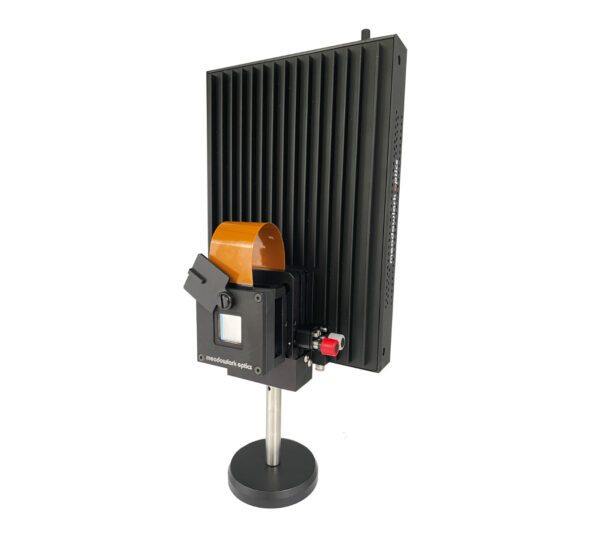
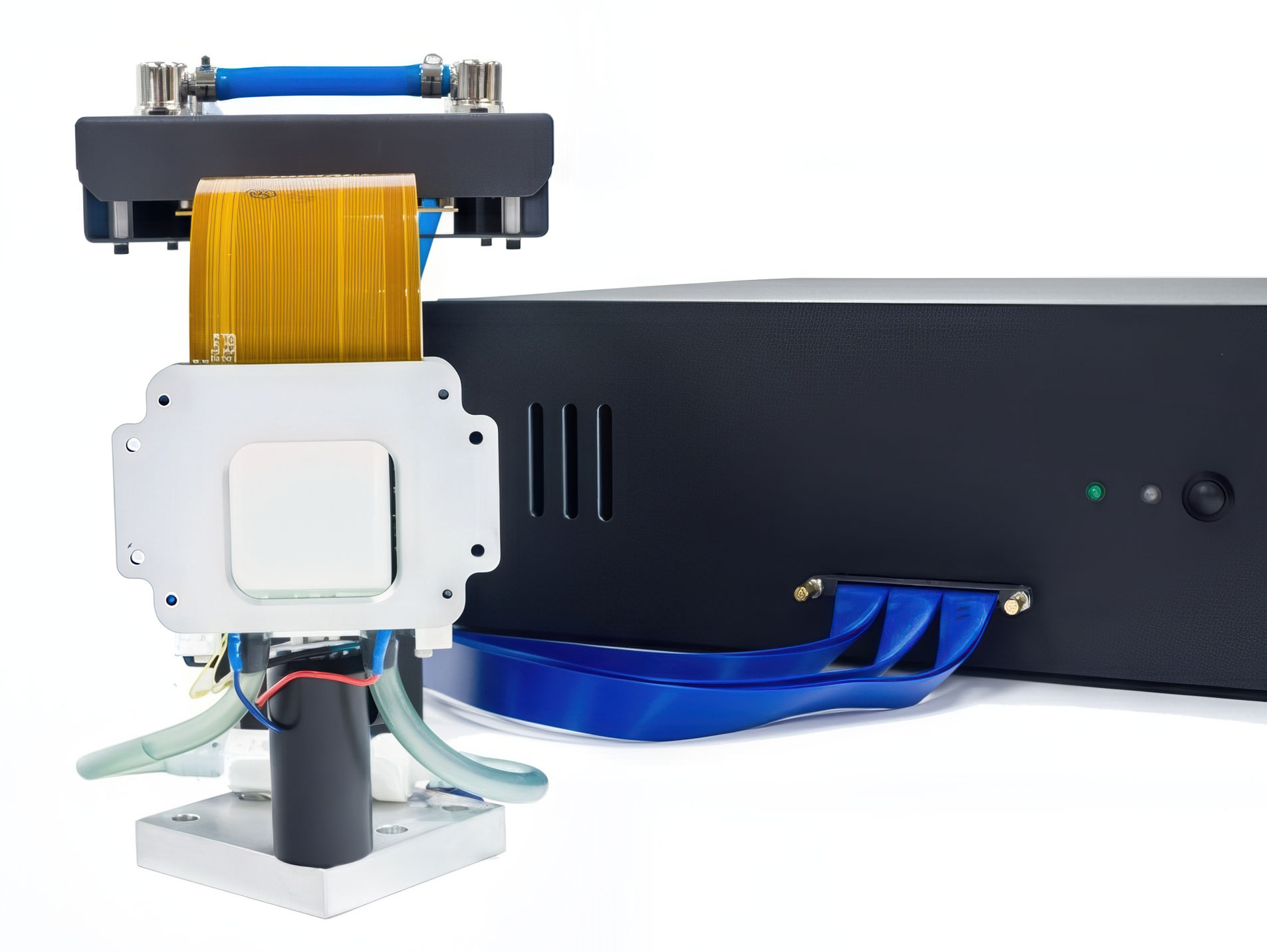
The 1536 × 1536 Spatial Light Modulator from Meadowlark Optics combines a high pixel count with very high hologram refresh rates and efficient phase modulation. With 1536 × 1536 pixels, a pixel pitch of 20 × 20 µm and a large active area of 30.7 × 30.7 mm the LCoS-SLM is particularly well-suited for applications where complex phase patterns need to be changed quickly and precisely.
The SLM was specifically developed for high speed. The large pixels are driven with high voltage and, thanks to their high capacitance, enable fast switching operations while simultaneously reducing fringing field effects and phase ripple. This improves efficiency, particularly in applications with large diffraction angles. For optimal and reproducible performance, the complete SLM head is thermally regulated.
Up to 600 holograms per second
A special feature of the 1536 × 1536 SLM is the fast Hologram-to-hologram control. At 1064 nm, the system achieves hologram switching rates of up to 600 fps at 89 % stationary diffraction efficiency. Hologram change rates up to 1000 fps were demonstrated with a correspondingly reduced efficiency.
This makes the SLM particularly suitable for applications where not only fast liquid crystal response times, but actually a rapid switching of complete complex phase masks is crucial.
On-board memory for fast phase masks
The control electronics receive 8-bit phase masks of 1536 × 1536 pixels via a fast 16-lane PCIe data link. In addition, up to 2045 custom phase masks stored directly on the controller hardware become.
These phase masks can then be accessed in any order. The built-in OverdrivePlus Technology calculates optimized transitions between the individual patterns. For stored holograms, the trigger latency is only 6 µs with a jitter of 3–9 µs.
High optical efficiency and phase stability
The SLM has a Fill Factor of 96 % and combines pure analog phase control with high reflectivity and high first-order efficiency. The thermal control ensures stable operating conditions even at high modulation speeds.
The combination of a high pixel count, large active area, and fast addressing makes the 1536 × 1536 SLM particularly interesting for dynamic holographic applications and demanding wavefront shaping.
For fast holographic applications
The 1536 × 1536 Spatial Light Modulator is particularly suited for applications where high spatial resolution and fast dynamic phase modulation are required simultaneously. These include, for example, holographic projection and photostimulation, laser beam shaping, adaptive optics, microscopy, optical manipulation, as well as research applications in photonics and quantum technology.
Through the combination of 1536 × 1536 pixels, up to 600 fps with high efficiency and fast on-board retrieval of stored holograms represents a high-performance solution for demanding dynamic wavefront control.
Wavelengths
The 1536 × 1536 spatial light modulator is configured and calibrated according to the desired laser wavelength and application.
The system's high speed is particularly beneficial for applications involving 1064 nm specified. At this wavelength, the SLM achieves hologram frame rates of up to 600 fps at 89 % stationary diffraction efficiency. Up to 1000 fps were demonstrated with a correspondingly reduced diffraction efficiency.
Additional wavelengths and custom configurations are available upon request.
Applications
The combination of a high pixel count, a large active area, and fast hologram switching makes the 1536 × 1536 spatial light modulator particularly attractive for dynamic applications in wavefront and beam shaping.
- Holographic projection
- Holographic photostimulation
- Laser Beam Shaping
- Adaptive optics and wavefront correction
- Holographic optical tweezers
- microscopy
- PSF Engineering
- Optogenetics
- Quantum Optics and Quantum Computing
- Optical information processing
- Structured illumination
- Volumetric imaging
- Imaging through scattering media
For its SLM platform, Meadowlark provides, among other things, application notes and research examples on optogenetics, pulse shaping, quantum optics, optical tweezing, microscopy, PSF engineering, and volumetric imaging.
OPTIONS
The 1536 × 1536 Spatial Light Modulator can be configured according to the optical application and the required operating conditions.
- Calibration according to the desired operating wavelength
- Configuration for High Hologram Frame Rates
- Optimization for High Optical Performance
- On-board storage of customer-specific phase masks
- Custom phase and wavefront calibration
- Integration into existing optical and experimental systems
Software and Control
The 1536 × 1536 spatial light modulator features powerful control electronics for the rapid transmission and display of complex phase masks.
High-Speed-Datenübertragung
Die Steuerelektronik empfängt 8-Bit-Phasenmasken mit 1536 × 1536 Pixeln vom Host-PC über eine schnelle 16-lane PCIe data link. Dadurch können auch große Phasenmuster mit hoher Geschwindigkeit übertragen und dargestellt werden.
On-board memory
Für besonders schnelle Abläufe können bis zu 2045 custom phase masks stored directly on the controller hardware werden. Die gespeicherten Muster lassen sich anschließend in beliebiger Reihenfolge aufrufen, ohne dass jedes Hologramm erneut vollständig vom Host-PC übertragen werden muss.
OverdrivePlus
Die integrierte OverdrivePlus Technology berechnet optimierte Übergänge zwischen aufeinanderfolgenden Phasenmasken. Dadurch werden schnelle Hologrammwechsel bei gleichzeitig hoher optischer Effizienz ermöglicht.
Bei 1064 nm erreicht das System Hologramm-Bildraten von bis zu 600 fps at 89 % stationary diffraction efficiency. Bildraten bis 1000 fps wurden mit entsprechend reduzierter Effizienz demonstriert.
Präzise externe Synchronisation
Gespeicherte Hologramme können extern getriggert und mit anderen Komponenten eines optischen Systems synchronisiert werden.
- Trigger-Latenz: 6 µs
- Trigger-Jitter: 3–9 µs
- On-Board-Speicher: up to 2045 phase masks
- Datenübertragung: 16-Bit PCIe
- Phasenmasken: 8 Bit, 1536 × 1536 Pixel
Damit eignet sich das System besonders für automatisierte Experimente und Anwendungen, bei denen eine exakt synchronisierte, schnelle Folge unterschiedlicher Wellenfronten benötigt wird.