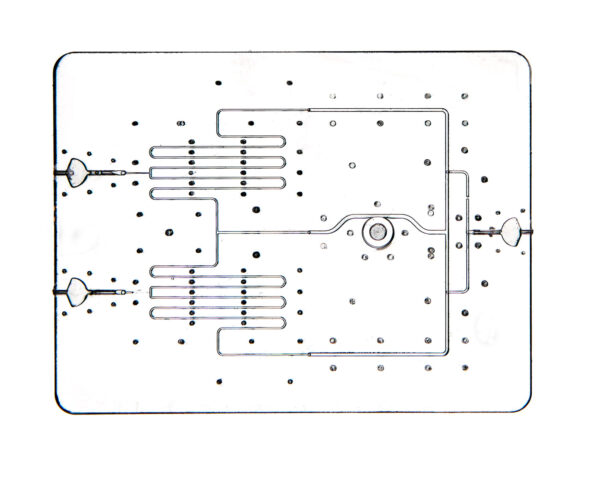
Microfluidic device
A Microfluidic device has a wide range of applications. In this post, we will discuss the definition of a microfluidic device, the difference between a microfluidic device and a microfluidic chip, and the different types of microfluidic devices available in the market.
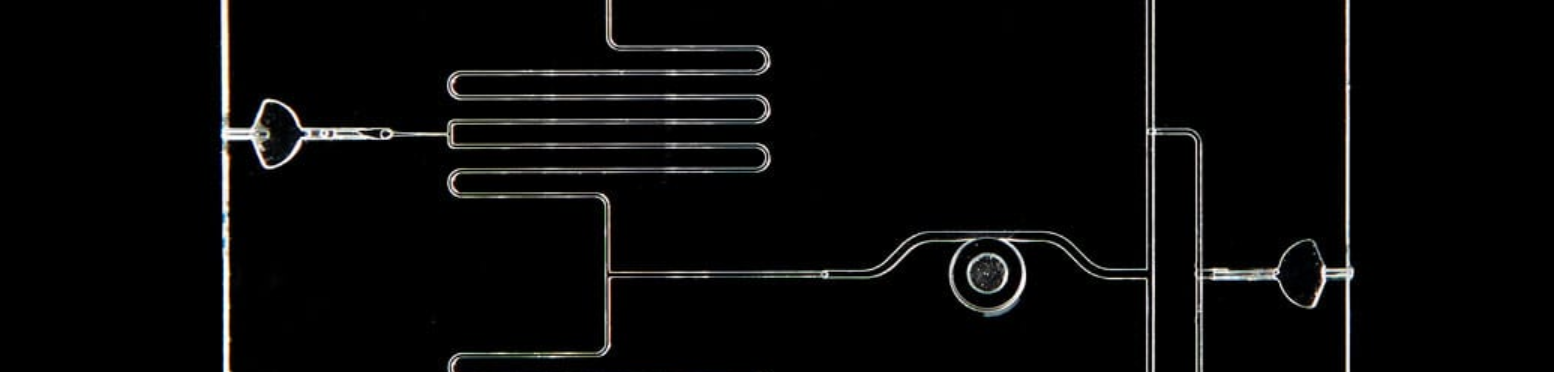
definition
A microfluidic device is a system that can precisely manipulate liquids in very small quantities, typically in the range of microliters (µL) to picoliters (pL). These devices use microscopic channels and chambers to transport, mix, separate, or carry out chemical reactions in liquids in a controlled manner. For this reason, microfluidic systems are widely used in various fields such as chemistry, biology, medicine and materials science.
Difference between microfluidic device and microfluidic chip
The term “microfluidic chip” actually comes from the electronics industry. Typically, the term microfluidic chip refers to the physical platform that houses the microfluidic device. Microfluidic chips are typically between 1 cm and 10 cm in size and, on average, look like a microscope slide. Therefore, a microfluidic chip can accommodate multiple microfluidic devices.
Types of microfluidic devices
Custom glass micromachining offers the advantage of being able to shape microfluidic devices, making them suitable for a variety of purposes. Some of the most common types of microfluidic devices are then listed.
Straight channel microfluidic device– a single straight microchannel with an inlet and an outlet.
Y-channel microfluidic device– mainly for separation applications
T-junction microfluidic device– for the generation of droplets, such as water-in-oil or oil-in-water.
Cross microfluidic device– Connection of two perpendicular channels to the main channel
Spiral microfluidic devices– a single spiral-shaped canal that branches at the outer end of the canals.
Materials for manufacturing microfluidic devices
Microfluidic devices are often made from PDMS, a special silicone. At Citrogene, we have developed our own method of using glass for microfluidic devices.
Citrogene: Glass Microfluidic Engineers
Microfluidics offers a variety of applications in a wide variety of industries. When it comes to developing the ideal microfluidic device for your specific needs, Citrogene is the company of choice. They develop precise, custom, state-of-the-art glass microfluidic devices tailored to customers' needs using their numerous proprietary processes.